

Machine learning teams thrive on speed, collaboration, and reproducibility yet traditional notebook environments often fall short when it comes to scalability and shared visibility.
Yeedu changes that equation. It seamlessly combines the flexibility of notebooks with the scalability of managed Spark clusters and enterprise-grade governance. The result? Data scientists and ML engineers can move from idea to production faster than ever, without sacrificing control or performance.
Why Interactive Notebooks Matter
Interactive notebooks are the foundation of modern machine learning workflows. They bring together experimentation, documentation, and collaboration in one unified environment enabling teams to think, build, and test in real time.
With Yeedu, notebooks become more than a coding interface they become a living workspace for teams to:
- Experiment rapidly - test ideas, fine-tune parameters, and visualize results on the fly without tedious reconfiguration.
- Document seamlessly - combine code, commentary, and data insights in one narrative flow that’s both readable and reproducible.
- Reproduce consistently - dependencies, and parameters.
- Collaborate effectively - share workspaces and experiments across teams.
However, traditional notebook tools often hit walls when scaling to large datasets or multi-user environments. Inconsistent dependencies, limited compute capacity, and lack of governance make enterprise-wide data science challenging.
Yeedu overcomes these barriers by integrating interactive notebooks tightly with managed Spark clusters, complete with built-in governance, secrets management, and intelligent cloud cost optimization.
Supporting Python, Scala, and SQL, Yeedu notebooks allow teams to perform end-to-end data science - from exploration to deployment - in a single, powerful interface. This makes it a true interactive notebook for data science that stays reliable at enterprise scale.
Building Smarter Notebooks in Yeedu
Yeedu notebooks go far beyond running isolated code cells. They form a comprehensive data science environment, fully integrated with compute, security, and performance optimization.
Below is a step-by-step guide to designing and using interactive managed Spark notebook environment effectively in Yeedu.
1. Start with a Workspace
Workspaces in Yeedu define the collaboration boundaries for your team controlling who can access what, which clusters are linked, and how dependencies are shared.
- Create a new workspace under Yeedu → Workspaces → New Workspace
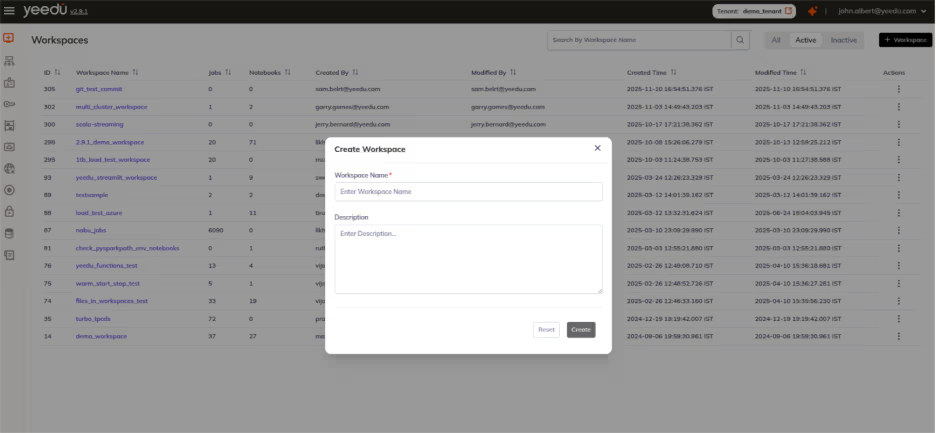
Assign appropriate roles to ensure clear governance:
- Admin – Full control over clusters, jobs, and libraries.
- Editor – can create and modify notebooks.
- Viewer – read-only for stakeholders.
- Once your workspace is ready, create a new notebook via
Yeedu → Workspace → Notebooks tab → New Notebook.
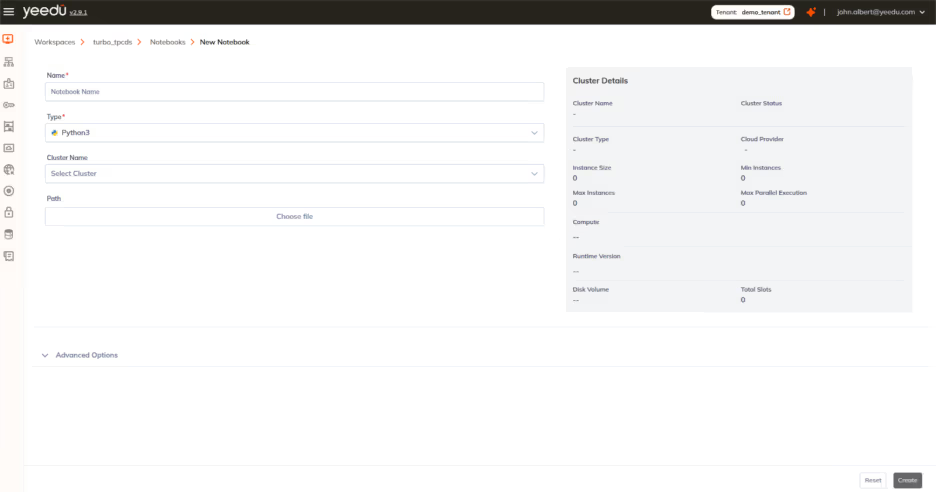
You can then link the workspace to one or more Spark clusters for scalable compute and shared storage access a key foundation of effective Spark cluster management.
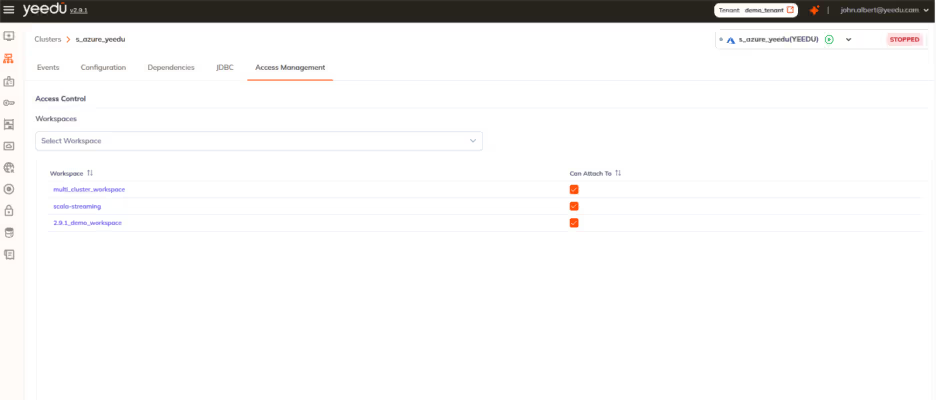
Tip: Maintain separate workspaces for experimentation, validation, and production. This structure enforces governance, isolates environments, and reduces cross-contamination of data or dependencies.
2. Configure Your Cluster
Every Yeedu notebook runs on a managed Spark cluster, so you can scale seamlessly.
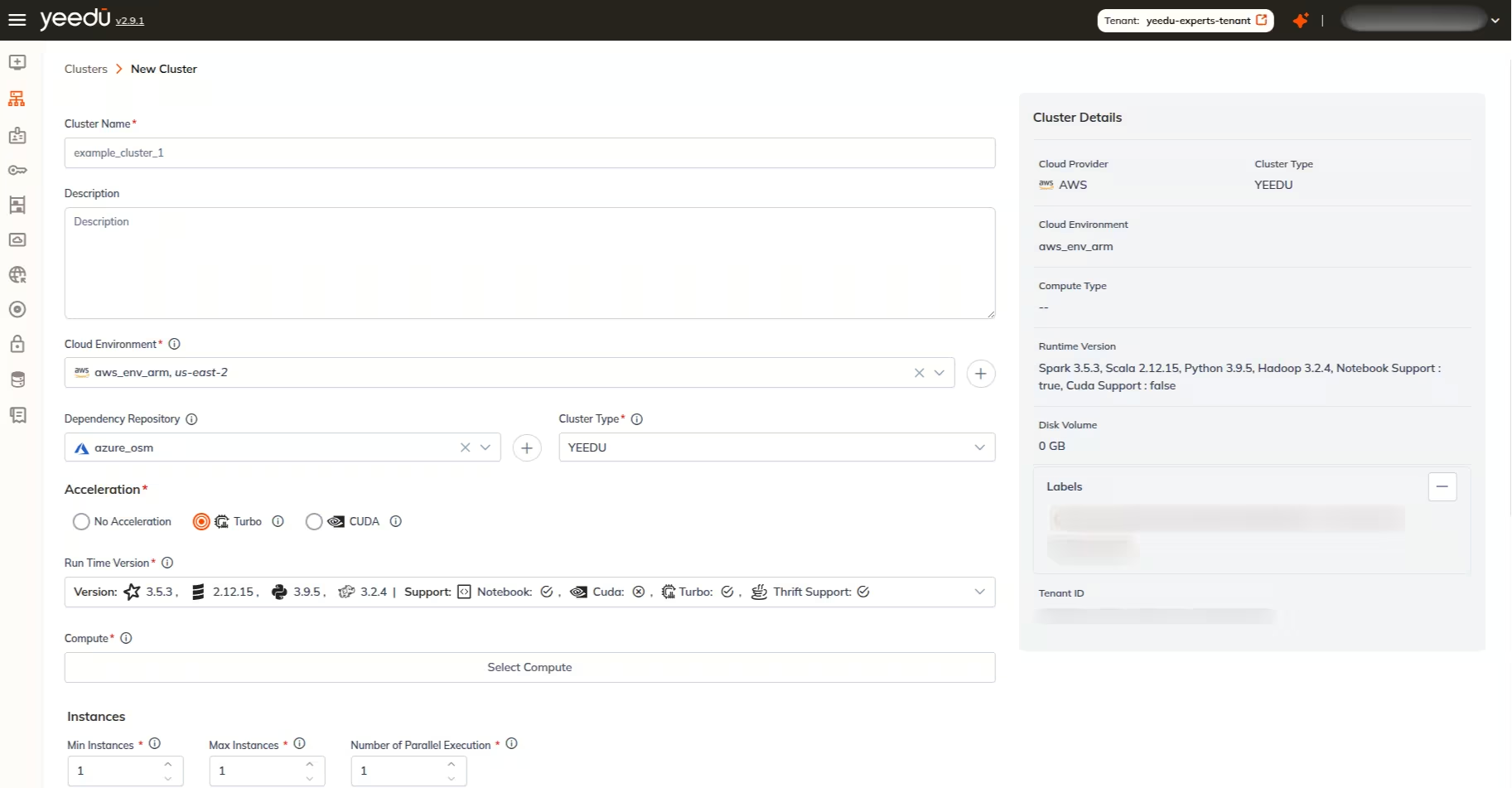
Recommended settings for optimal performance:
- Enable Turbo Mode: Achieve sub-second execution times for interactive exploration.
- Auto-stop: Automatically shut down idle clusters for cloud cost optimization.
- Attach dependency repositories: Ensure consistent library versions across runs.
Yeedu simplifies cluster management - you can select runtimes, tune worker sizes, attach libraries, and monitor cluster health directly from the UI.
3. Create and Organize Your Notebook
A well-structured notebook enhances readability, reproducibility, and collaboration.
Yeedu notebooks support:
- Inline visualizations for quick insights.
- Multi-language execution (Python, Scala, SQL) for flexible data processing.
- Persistent outputs to retain cell results between sessions.
Performance & Cost Optimization
Yeedu includes several built-in features for Spark cost optimization and performance tuning:
| Setting | Description | Benefit |
|---|---|---|
| Turbo Mode | Low-latency execution | 4–10x |
| Auto-Stop | Stops idle clusters | Saves 20–40% costs |
| Dependency Caching | Keeps libraries loaded | Faster startup |
| Spot Instances | Uses cheaper compute nodes | Reduces experiment cost |
These capabilities enable a high-performing yet cost-efficient Spark ML notebook environment ideal for scaling iterative experiments.
Governance & Security
Yeedu ensures enterprise-grade compliance through:
- RBAC (Role-based Access Control)
- Secrets Management
- Audit Logs
- Workspace Isolation
- Multi-cloud Compliance (AWS, Azure, GCP)
Each workspace has isolated credentials, secret scopes, and access policies, providing a secure foundation for large-scale interactive notebooks for data science.
Best Practices Checklist
| Area | Recommendation |
|---|---|
| Workspaces | Maintain separate environments for development, testing, and production. |
| Clusters | Enable Turbo Mode and Auto-stop for cost-effective performance. |
| Dependencies | Centralize in repositories. |
| Governance | Use RBAC and audit logs. |
| Cost | Monitor cluster utilization regularly to improve Spark cost optimization. |
| Documentation | Summarize insights, parameters, and results in each notebook for easy reproducibility. |
Conclusion
Yeedu redefines what interactive notebooks can achieve.
They’re no longer just personal playgrounds for data exploration they’re collaborative, scalable, and production-ready ML environments.
By uniting Spark performance, smart Spark cluster management, governance, and cost optimization in one cohesive platform, Yeedu empowers data teams to:
- Experiment faster,
- Deploy models with confidence, and
- Innovate continuously with full visibility and control.
Yeedu transforms notebook-based experimentation into an enterprise-grade, managed Spark notebook environment for building, scaling, and governing machine learning all without breaking the rhythm of innovation.